Once you have heard it, it cannot be unheard! “Prisencolinensinainciusol” is a unique song written by Italian singer Adriano Celentano, aimed at mimicking what American English sounds like to non-English speakers. Despite its nonsensical lyrics, the song achieved great success, charting in multiple countries including the U.S., and has even become a cult classic over the years.
Who is Adriano Celentano?
Adriano Celentano is an Italian singer, songwriter, comedian, and actor. He gained fame as a rock’n’roll icon in Italy by covering American hits, and was featured as a singer in Federico Fellini’s 1960 film “La Dolce Vita.”
Known for his flair for physical comedy and later became recognized as a satirist and comedian in Italy. He wrote “Prisencolinensinainciusol” in 1972, leveraging his experience imitating American English, despite not speaking the language.
When you first listen to the song, you will of course get its nasal vocals, the stomping drum beat, and horn blasts! Even if the song resembles English, a part of the word “alright”, which he repeats in each chorus, there is absolutely none of the lyrics that make sense.
It did not become an immediate hit, and the song’s re-release in 1973, following a live TV performance with Raffaella Carrà, led to its commercial success. Adriano is still alive and the last known performance of the song live was in Verona Arena in 2012 at the age of 74.
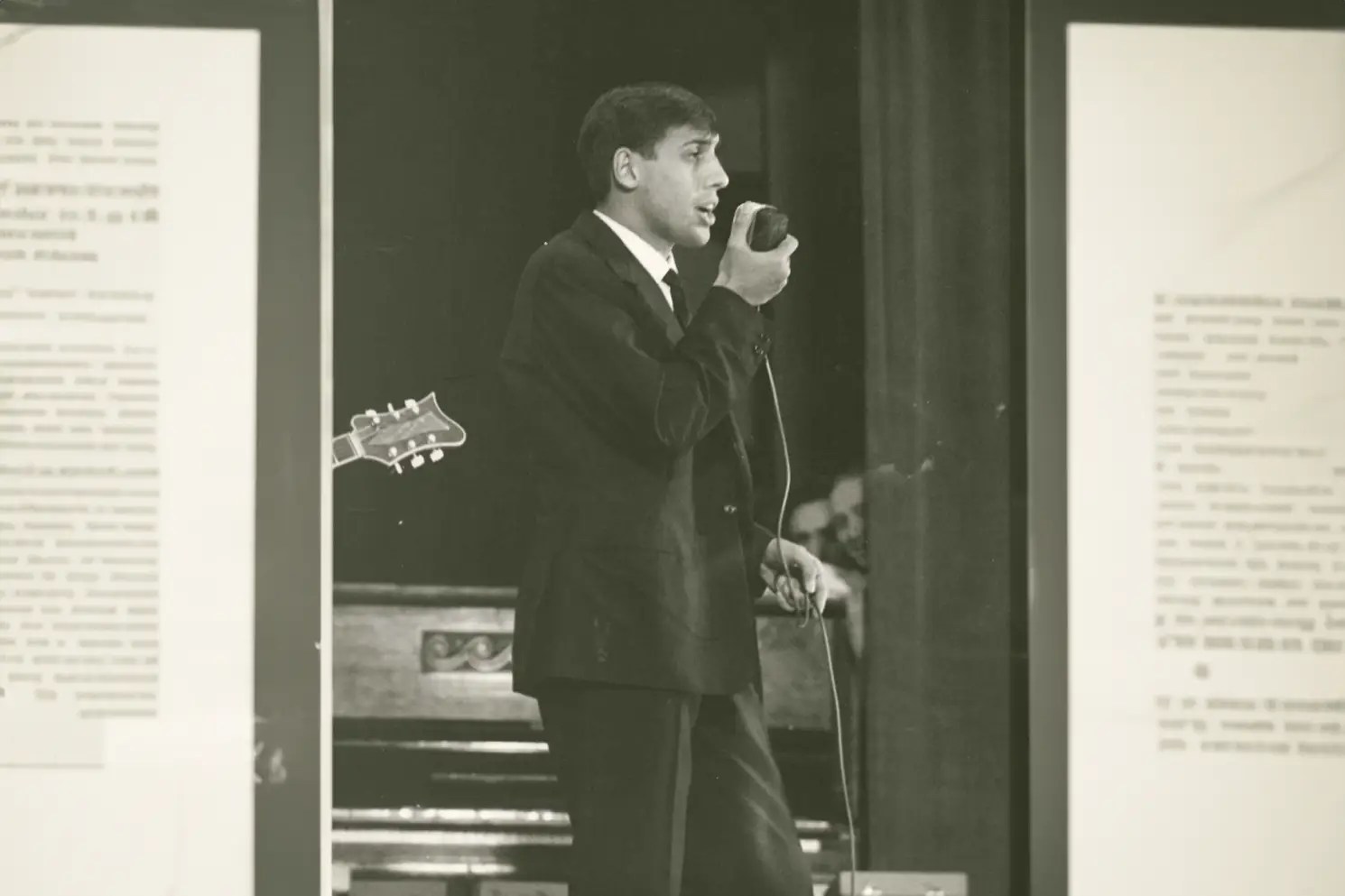
Image from Collezione Biblioteca Comunale G.D. Romagnosi, Salsomaggiore Terme – https://photos.visitsalsomaggiore.it/dettaglio-foto/55210/ and the image is expanded using AI.
Song’s Impact and Legacy
- Initially ignored upon release but became a hit after a live TV performance.
- Charted in Italy, Belgium, Germany, and France, and reached number 86 in the U.S.
- Covered and remixed by various artists, including EDM legend Benny Benassi and Italian singer Mina.
- Considered acoustically avant-garde; one of the first popular songs made using a loop.
- Cited as an early example of rap due to its repetitive vocals and offbeat rhythm.
Popularity on Social Media
I found the song was in an Instagram post, and the song immediately hit the “weird button” and went straight into my strange and cool music library. But it has had its stints on SoMe before. It went viral in 2009 on YouTube and has spread across various platforms including TikTok, Twitter, and Instagram. Periodically it resurfaces, highlighting its enduring appeal and versatility. Such as in 2023…
The song’s success demonstrates not just the power of catchy music but also the intriguing potential of language—or the absence of it—to capture global attention.


 shuffle » play